
Isfahan Handicrafts
مهر
Isfahan, the city of a thousand designs and arts, as the artistic heart of Iran, is the cradle of Isfahan handicrafts and houses a unique collection of artistic heritage, master craftsmen’s skills and traditional innovations. These arts, which have their roots in the Safavid era, today not only create a decorative and decorative effect in modern homes and spaces, but also act as a symbol of Iranian culture and identity and an important tool in the development of exports and cultural diplomacy. At Isfahan Parsian Handicrafts Store, you can benefit from a wide variety of authentic products with a guarantee and quality assurance and have a safe and satisfying experience of buying Isfahan handicrafts.
What distinguishes the category of handicrafts from the art of craftsmanship is the purpose of making them. Handicrafts are items that are intended to be used and worn out. Their uses are more than just simple decoration. Handicrafts are often considered cultural and traditional works because they are part of the requirements of everyday life. While arts and crafts are more of a hobby-like activity and a perfect presentation of a creative technique, in practical terms, different types of crafts overlap a lot due to the similarity in use.
The value of crafts goes beyond their aesthetic appeal and is of unparalleled importance from a cultural, economic and social perspective. On the one hand, these works express the traditions, customs and beliefs of the society, and on the other hand, they contribute to the local economy by creating employment, especially for women and rural communities. Each handmade work carries the feelings and creativity of its creator and, as a legacy from generation to generation, strengthens the national and cultural identity of the society.
Isfahan is one of the main poles of artistic and decorative production in the world due to its skilled artists. Isfahan, the cradle of Iranian art, has unique handicrafts such as enameling, calligraphy, inlay and turquoise carving. To obtain these original works at different prices, you can contact the handicraft production centers in Naghsh-e Jahan Square or with collections such as Parsian Handicrafts, which are active in online sales.
Isfahan is known as the capital of Iranian handicrafts, and its artists play a significant role in the country’s artistic production.
Isfahan’s global position in handicrafts
Isfahan has a special position not only in Iran, but also in the world. This city was introduced as the “Global City of Handicrafts” by the World Handicrafts Council in 2015 and joined the UNESCO Creative Cities Network in this field in 2023.
The importance of this position becomes clearer when we know that Isfahan produces about 60 percent of all Iranian handicrafts, and nearly 200 of the 300 registered disciplines in the country are active in this province. More than 70,000 artists are active in about 9,000 workshops.
The most important and famous handicrafts of Isfahan
Here are some of the most significant and exquisite handicrafts of Isfahan
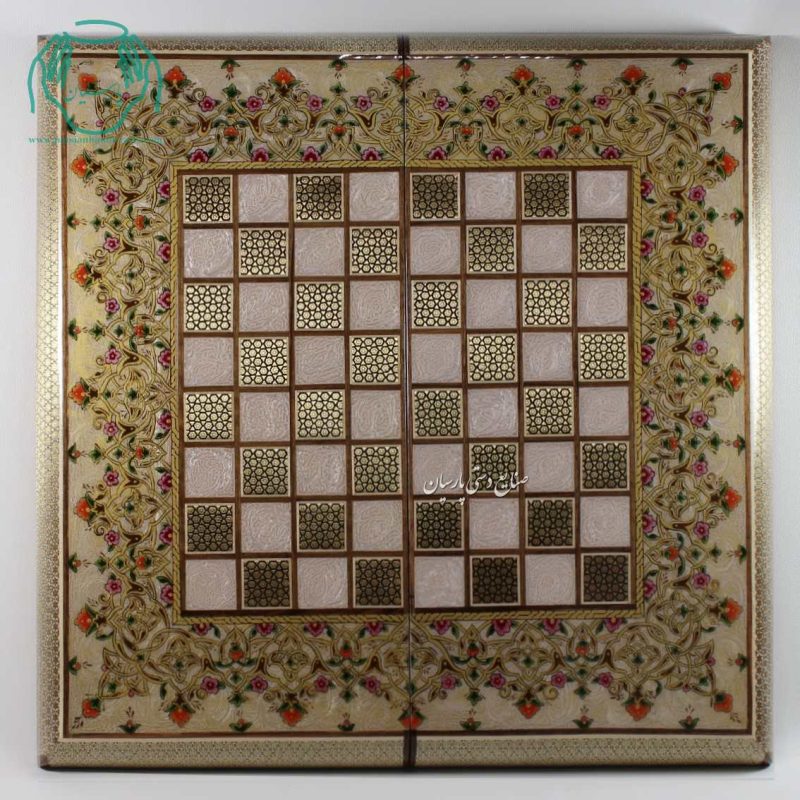
Khatamkari
A delicate and valuable art in which very small pieces of colored wood, metal, and bone are arranged together in regular geometric shapes and applied to the surface of wood or metal.
Application: Used in the manufacture of various jewelry boxes, photo frames, Quran scrolls, backgammon boards, and chess sets.
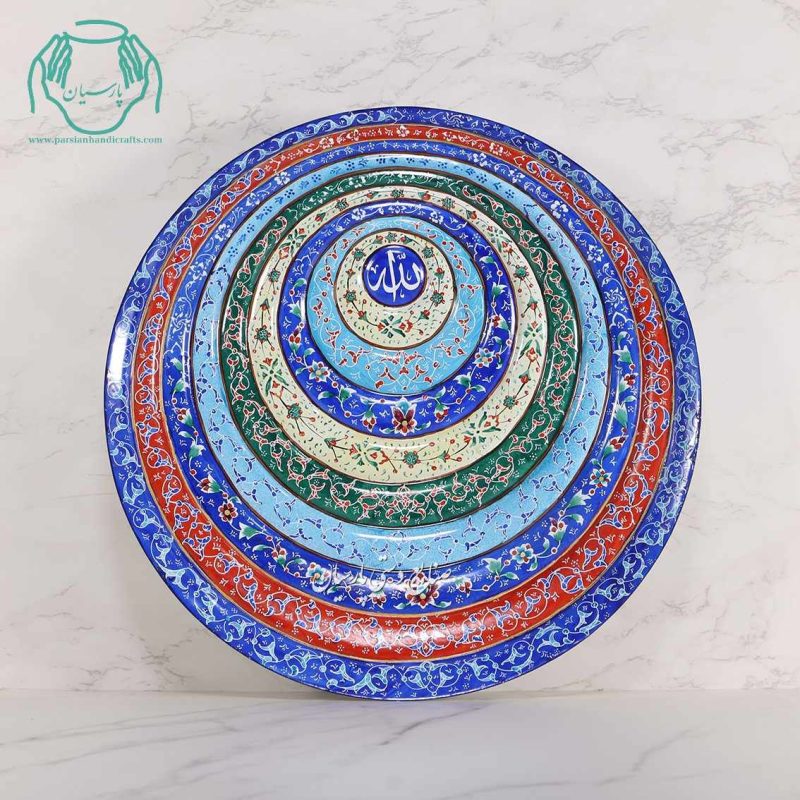
Minakari
The art of painting and decorating metals such as copper, silver, and gold using special enamel colors that are baked and fixed at very high temperatures. Isfahan is the main center of enamel production in Iran.
Characteristics: Its dominant colors are blue and turquoise and are often seen on plates, vases, and decorative containers.
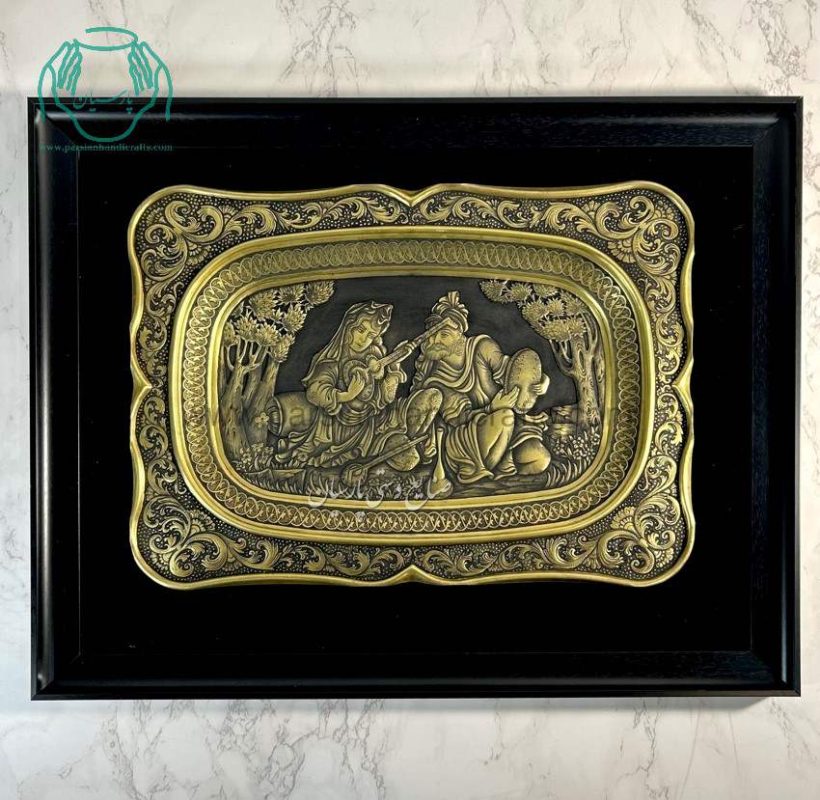
Qalamzani
One of the most valuable handicrafts, in which the artist creates beautiful and embossed designs on metal objects such as copper, silver, and brass using special pens.
Ghalamkar Fabric
The art of hand-printing using wooden stamps engraved on cotton, silk, and linen fabrics. Its designs often include floral, bird, Islamic, and calligraphy motifs. This art was registered as a World Heritage Site in 2023.
Turquoise Stamping
The art of hammering and placing small pieces of turquoise stone on the surface of containers or decorative objects, which gives them a special beauty.
Other notable arts:
Coppersmithing and Copperware and Pardaz: Making and decorating various types of copper vessels.
Painting and Miniatures: Delicate and traditional Iranian paintings.
Woodcarving: The art of carving on wood.
Tapestry Making: Making objects with thin metal wires.
Mosaic Tile: Combining colorful pieces of tile to create patterns.
Carpets and Rug Weaving: Isfahan is an important center for the production of exquisite handmade carpets.
Handicrafts, a dynamic economy
Isfahan handicrafts are not just an art, but have become a dynamic economic industry. The export value of these products exceeded $15 million in the fiscal year ending March 2024. Also, during the Nowruz 1404 holiday, about 600 handicraft stalls in Isfahan managed to sell about 250 billion rials.
Best places to buy
The best and most authentic places to buy these works of art are the historical bazaar of Isfahan (especially around Naqsh-e Jahan Square) and artists’ workshops throughout the city. In these places, you can find a variety of products from copper vessels and calligraphy to khatam and enamel. You can also buy Isfahan gaz and pulki as edible souvenirs.
The value of handicrafts goes beyond their physical beauty and is of unparalleled importance from a cultural, economic and social perspective. On the one hand, these works express the traditions, customs and beliefs of the community, and on the other hand, they contribute to the local economy by creating employment, especially for women and rural communities. Each handmade work carries the feelings and creativity of its creator and, as a legacy from generation to generation, strengthens the national and cultural identity of the community.
Enamel Crafts
The art of Isfahan enamel crafts is formed by combining fire, metal, and mineral colors, and has reached the peak of beauty in Isfahan. In this process, after shaping, the copper vessel is glazed several times and baked in a kiln to create a white and shiny surface. Then, the master craftsman draws patterns such as salimani and flowers and birds with colors derived from metal oxides, and these colors are fixed in the glaze during the final baking. To recognize authentic enamel, one should pay attention to the transparency of the glaze, the appropriate thickness of the copper, the elegance of the painting, and the health of the back of the vessel. In the market, Isfahan enamel has a wide range of prices, from market and economical samples to luxurious and collectible works.
Isfahan Handicrafts Khatam Kari
Khatam Kari is one of the most precise decorative arts of Iran, formed by placing tiny triangles of wood, bone, and metal together, and its peak flourished during the Safavid era. In this completely geometric art, raw materials such as natural colored wood, camel bone, and brass or silver wires are used to create an eye-catching and durable combination. The process of making Khatam Kari crafts in Isfahan includes cutting prisms, making flowers, layering, gluing on the substrate, and final finishing, which requires millimeter skill. To recognize a high-quality Khatam, attention should be paid to the smoothness of the surface, the fine pattern and density of the flowers, the precise symmetry, and the natural color of the wood and bone, as these features indicate the quality and true value of the work. Enter the Khatam Backgammon Gallery to visit.
Isfahan Turquoise Crafts
The art of turquoise crafts, by arranging small pieces of turquoise stone on a copper body, is one of the most attractive combinations of metal and stone in Isfahan. This art, which is about seven decades old, first took shape in Mashhad and then evolved in Isfahan with copper vessels and voluminous forms. In the production process, first the metal body is made, then the turquoise pieces are glued to the surface with a strong adhesive and, after sanding and finishing, it is protected with a layer of polyester. In the valuation of this art, the quality of the stone—especially Neyshabur turquoise—the density of the grains, the uniformity of the surface, and the appropriate thickness of the copper play a decisive role, and the sum of these factors determines the originality and final beauty of the work.
Isfahan Calligraphy Handicrafts
Calligraphy handicrafts are one of the most authentic ways of storytelling on metals, which are done by carving and creating embossed or delicate designs on copper, brass and silver. In Isfahan, this art is performed in embossed, small-scale, lattice and Shirazi styles, and each style offers a different level of depth, elegance and volume. In the Isfahan calligraphy handicrafts production process, the back of the container is first filled with bitumen to control the hammer blows, then the designs are engraved on the metal and in the final stage, polishing and blackening are done to see more details. To identify the original sample, one must examine the high weight of the container, the natural difference in hand strokes, irregular back work and lines with variable depth; because the thin-sheet press samples are known to have completely uniform designs, smooth backs and lower prices. These differences determine the true value of the calligraphy handicrafts on copper.
Copper and Pardaz Dishes
Among the wide variety of Isfahan handicrafts, the art of copper and pardaz is one of the popular innovations in which parts of the copper body remain visible and the Pardaz paintings are applied to the dish without the need for a kiln. This combination of shiny copper and dotted colors creates a modern and affordable look, and this feature has made copper and pardaz one of the best-selling decorative products of Isfahan handicrafts.
Diamond-cut dishes
Diamond-cut dishes are also a new style of Isfahan handicrafts that create an eye-catching contrast between the black color and the shine of copper by coating it with dark kiln paint and engraving with diamond pens. This art has a luxurious and modern look and is considered a valuable choice among Isfahan handicraft products for decoration and organizational gifts due to the resistance of the surface to oxidation.
Miniature and Painting
Miniature and painting are brilliant branches of Isfahan handicrafts that give a unique look to works of art by combining vivid colors, delicate designs, and the narration of historical and literary stories. These arts, which have their roots in Safavid and Qajar traditions, are used today in paintings, frames, and luxury home decors, and convey a luxurious and authentic look of Iranian culture. At the Parsian Handicrafts Store in Isfahan, you can view and purchase a collection of enamel, painting, and miniature works with guaranteed authenticity and quality, and have a different experience of buying Isfahan handicrafts.
Qalamkar Fabric
Qalamkar fabric is one of the prominent branches of Isfahan handicrafts, which is done by hand printing on cotton and linen fabrics. After washing and dyeing with pomegranate peel, the master craftsman creates Khatai and Asli patterns on the fabric with wooden molds and natural colors such as black, red, blue, and yellow. The color is fixed by steaming and washing to ensure the durability of the designs. To identify a quality Qalamkar, it is essential to pay attention to the fabric type, print clarity, and number of colors, and these fabrics are preserved by gentle washing and drying in the shade.
List of Isfahan Handicrafts
Wooden Arts and Carving
Wood Carving and Lattice
Wood Mosaic
Combination of Porcelain Layers and Wood Mosaic
Wooden Volumes
Carved Lattice
Wood Joinery
Sculpture
Axe-making
Wood Burning
Pottery, Ceramics and Tiles
Pottery and Ceramics
Ceramic Pottery
Glazed Pottery
Painting on Pottery
Traditional Tile Making (Carving)
Mosaic Tiles
Stone Carving
Metalworking and Jewelry
Metal Crafts
Jewelry
Pen and Lattice
Pen and Lattice
Copper Engraving
Stone Engraving
Metal Lattice
Trigger Stand
Traditional Lock Making
Turquoise Cutting
Copper and Metalworking
Diamond-cut Containers
Traditional Weaving and Textiles
Silk Embroidery
Zari Weaving
Traditional Embroidery
Sarma Embroidery
Gypsum Weaving
Giveneh Weaving
Knitting Traditional
Wave weaving
Handwoven Dari (Zelzaleh weaving)
Kilim weaving
Charogh embroidery
Crocheting
Qalamkar fabric
Painting, illumination and decorative arts
Painting
Lacquer painting
Glass painting
Illumination and inscription
Illumination
Qalamkari
Batik printing
Enamel work
Khatamkari
Leather and saddlery
Leather handicrafts
Leather binding
Traditional saddlery
Leather patterning
Combined and decorative arts
Glassware
Stone mosaic
Traditional jewelry
Leather art

